
BMI: What It Actually Tells You, and the Better Measurement You Can Do at Home
Key takeaways
- BMI was designed to describe populations, not to assess individuals, and cannot distinguish muscle from fat or see where fat sits.
- Risk thresholds differ by ethnicity and age, so the standard cut-offs do not apply equally to everyone.
- Waist-to-height ratio predicts metabolic and cardiovascular risk better, and the rule is to keep your waist under half your height.
- People with a healthy BMI but a ratio of 0.5 or above carry elevated risk that BMI alone would miss entirely.
- Losing 5 to 10 percent of body weight improves metabolic markers substantially, which is a more useful target than a chart category.
BMI has an odd status. It is used everywhere, from insurance forms to clinical guidelines, and it is simultaneously criticised by most of the researchers who work with it. Both positions are defensible once you understand what the number was built to do. It was designed to describe populations, not to judge an individual standing on a scale. Here is what it can tell you, what it cannot, and the measurement that does the job better.
What BMI is, and the one job it does well
Body mass index is your weight divided by the square of your height. That is the whole calculation, devised in the nineteenth century by a statistician studying populations rather than by a physician assessing patients. As a way of describing the distribution of body size across large groups, it works, which is why epidemiology still uses it.
As a screening tool at the individual level, it retains some value. At the extremes it is reasonably informative, and it is free, requires no equipment beyond scales and a tape measure, and can be tracked over time. The problem is not that BMI is meaningless. It is that the number is treated as a diagnosis of health when it is, at best, a rough first indicator that may or may not represent excess body fat in the person in front of you.
What it misses
BMI cannot distinguish muscle from fat, which is the most cited limitation and the easiest to demonstrate: plenty of muscular athletes register as overweight or obese while carrying very little fat. It also cannot see where fat sits, and location matters enormously. Fat around the abdomen and organs behaves very differently, metabolically, from fat on the hips and thighs, and it is the abdominal kind that tracks with insulin resistance, fatty liver and cardiovascular risk.
It also performs unevenly across populations. Risk thresholds differ meaningfully between ethnic groups, with people of South Asian descent, for example, developing metabolic problems at lower BMI values than the standard cut-offs suggest. Age changes the picture too, since older adults lose muscle and gain fat while the number stays put, and the same BMI at 70 describes a different body than at 30. Reviews of BMI's diagnostic performance conclude much the same thing: it is a screening tool, not a measure of adiposity, and it is unreliable for judging how much excess fat is affecting any individual's health.
The measurement that predicts better
Waist-to-height ratio is the practical alternative, and it takes about thirty seconds. Measure your waist, divide it by your height, and use the same units for both. The threshold is easy to remember: keep your waist to less than half your height, so a ratio under 0.5.
The reason it works better is that it captures central fat, the kind that matters metabolically, while adjusting for body size. Systematic reviews have found waist-to-height ratio outperforms BMI for predicting metabolic syndrome, type 2 diabetes, cardiovascular disease and mortality. Perhaps the most useful finding is what it reveals inside the normal BMI group: people with a BMI in the healthy range but a ratio of 0.5 or above show significantly elevated cardiometabolic risk factors, which is exactly the person BMI reassures and should not. Clinical guidance increasingly recommends pairing BMI with a measure of fat distribution rather than using it alone.
How to measure your waist properly
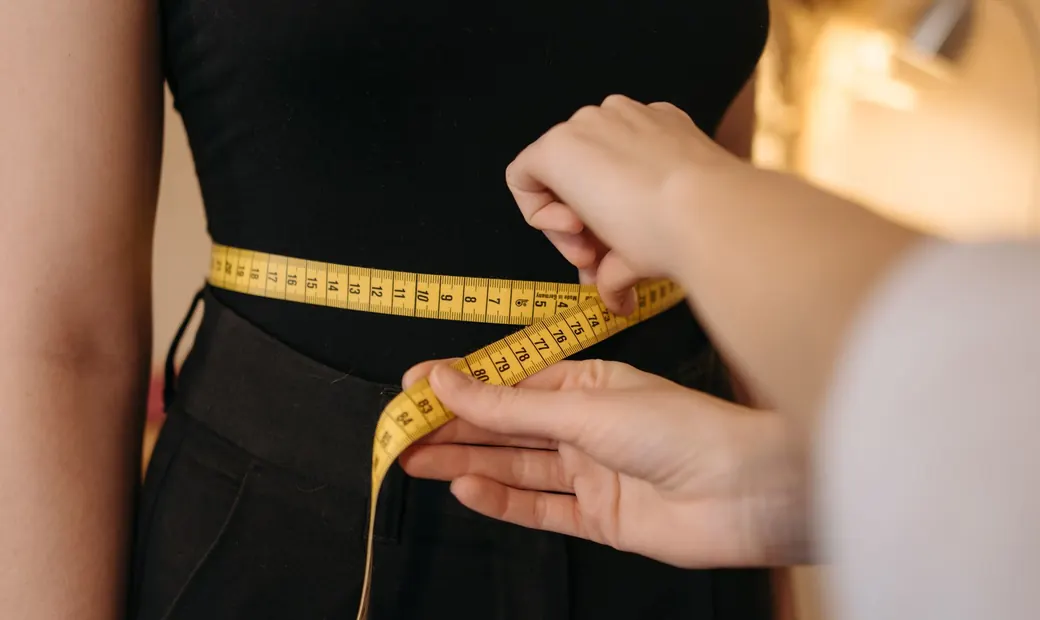
Most people measure in the wrong place, which makes the result useless. Measure directly against skin or over thin clothing, not over a jumper. Find the midpoint between the bottom of your ribs and the top of your hip bone, which is usually slightly above the navel and is not where your trousers sit.
- Stand up straight, feet together, and relax your arms at your sides.
- Breathe out normally and measure at the end of that breath, without sucking in.
- Keep the tape horizontal and snug, without compressing the skin.
- Measure at the same time of day, ideally in the morning, when repeating it.
- Divide the waist figure by your height in the same units, and compare against 0.5.
Then treat the result as one input rather than a verdict. Blood pressure, blood sugar, lipids, fitness and how you actually function matter alongside any number derived from a tape measure.
What to do with the number
If your ratio sits above 0.5, the useful response is not panic or a crash diet. Central fat responds to the same unremarkable things everything else does: reducing ultra-processed food and sugary drinks, eating enough protein and fibre, resistance training to preserve muscle, regular aerobic activity, sleeping properly and moderating alcohol. Modest weight loss, in the region of 5 to 10 percent, produces disproportionate improvement in the metabolic markers that matter, which is a considerably more encouraging target than a number on a chart.
It is also worth keeping the whole exercise in proportion. These are screening measures, not statements about worth, and fixating on them does real harm to some people. If tracking body measurements makes your relationship with food or exercise worse, tracking blood pressure, resting heart rate, strength or how far you can walk without stopping gives you the same useful information about health without the same risks. Fitness improvements reduce cardiovascular risk substantially even when body size changes very little.
When to talk to a doctor
Worth raising with a doctor: a waist-to-height ratio above 0.5, particularly alongside a family history of diabetes or heart disease, since it justifies checking blood pressure, HbA1c and lipids. Also worth raising is unexplained weight change in either direction, which needs investigation rather than interpretation with a tape measure.
If disordered eating is part of your history, discuss any measurement-based approach with a clinician before starting, since these tools are not neutral for everyone. This is general information rather than medical advice. The practical summary is that BMI is a blunt population instrument, waist-to-height ratio is a better individual screen, and neither replaces the handful of blood tests and lifestyle facts that actually determine metabolic health.
Frequently asked questions
Is BMI accurate for individuals?
Not particularly. It cannot separate muscle from fat, ignores fat distribution, and performs differently across ethnic groups and ages. It is a screening tool for populations rather than a measure of an individual's body fat.
What is a healthy waist-to-height ratio?
Below 0.5, meaning your waist measurement should be less than half your height. The same threshold applies regardless of the units you use, as long as both measurements use the same one.
Is waist-to-height ratio better than BMI?
For predicting metabolic syndrome, type 2 diabetes, cardiovascular disease and mortality, systematic reviews find it performs better, because it captures central fat while adjusting for body size.
Where exactly should I measure my waist?
At the midpoint between the bottom of your ribs and the top of your hip bone, usually slightly above the navel. Measure against skin, breathe out normally, and keep the tape horizontal and snug without compressing.
Read next
- Why Weight Changes After 40, and What To Do About It
Why the same number describes a different body over time.
- Prediabetes: The Wake-Up Call Millions Miss
The metabolic problem central fat tends to signal.
- Healthy Weight Loss: What Actually Works Without Extremes
What to do if the number suggests action.
This article is for general informational purposes only and is not medical advice. Always consult a qualified healthcare professional about your individual situation, and never start or stop a medication without your doctor. See our Medical Disclaimer.