
Face Yoga and Gua Sha: What They Actually Do to Your Face
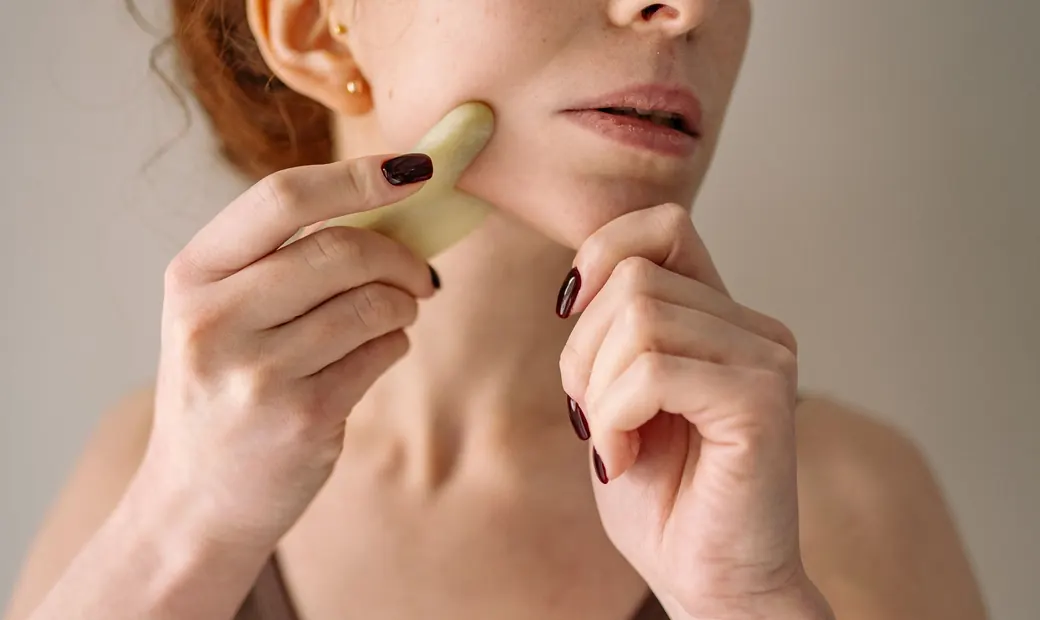
Key takeaways
- Controlled trials show facial massage increases blood flow and lymphatic drainage, with gua sha improving microcirculation and reducing muscle tension.
- The visible effect is mostly reduced fluid retention and a temporary flush, which is real but fades within hours.
- No good evidence supports permanent structural change or wrinkle reversal from massage or facial exercises.
- Face yoga rests on a small, weak evidence base, and repeated forceful expression may deepen lines rather than soften them.
- Use oil for slip, light pressure and work toward the neck, and avoid it on active acne, rosacea flares or broken skin.
Facial massage has become one of the biggest categories in beauty content, with jade rollers, gua sha stones and face yoga routines promising to lift, sculpt and de-age. Some of it does something measurable. None of it does what the before-and-after photos imply. Here is the distinction, and it is a useful one, because the honest version still leaves you with a reason to do it.
What the controlled studies found
There is more research here than sceptics assume, and less than enthusiasts claim. A randomised controlled trial comparing facial rollers and gua sha massage over eight weeks found both increased blood flow and lymphatic drainage, with gua sha showing greater effects on microcirculation and reduced muscle tension.
Reviews in the dermatology literature land in a consistent place: facial gua sha produces modest physiological effects, specifically a transient improvement in surface microcirculation and a short-term reduction in facial swelling. Those effects are real and they are measurable. What has not been demonstrated is the thing being sold. Wrinkle reversal claims outstrip what any current study has measured, and there is no good evidence that massage produces permanent changes in facial structure.
So what is actually happening
Mostly, you are moving fluid. Faces retain fluid overnight, particularly after salt, alcohol or poor sleep, and massage moves it along. That is why the morning result looks genuinely impressive and why it fades over the day. It is a real effect with a real mechanism, and it is temporary by nature.
The flush that follows is increased blood flow to the skin surface, which gives that immediately healthier appearance. Again real, again transient. Photographs taken before and after a session capture both changes at their peak, which is why the images look more convincing than the long-term evidence supports. Add better lighting, a slight change in head angle and skin freshly hydrated with the oil used for the massage, and you have the standard transformation post. None of that requires anyone to be lying about their own experience.
Face yoga specifically
Face yoga, meaning repeated facial exercises, rests on a different theory: that facial muscles can be built up like any other muscle, filling out areas that have lost volume. The reasoning has surface appeal and a problem underneath it.
Facial ageing is driven mainly by loss of fat pads, bone remodelling, and collagen and elastin breakdown from sun exposure and time. Muscle strength is a small part of that picture, and facial muscles attach differently from skeletal muscles, often inserting directly into skin. There is one small study frequently cited, in which participants doing daily facial exercises for months were rated as looking slightly younger, with a modest average difference. It was small, unblinded in important ways, and demanded a level of daily commitment few sustain. There is also a plausible concern in the other direction: repeated forceful facial expression is what creates expression lines in the first place, which is precisely why botulinum toxin works by stopping that movement. Aggressive facial exercising may deepen the lines it is meant to soften.
Doing it without damaging your skin
If you enjoy it, and many people genuinely do, a few practical rules keep it harmless.
- Always use slip: oil or a rich serum. Dragging a stone across dry skin causes irritation and micro-damage.
- Use light pressure. The lymphatic vessels doing the work sit just under the skin, so pressing hard adds nothing and risks bruising.
- Work outward and downward toward the neck, following drainage rather than pushing upward against it.
- Avoid it entirely on active acne, rosacea flares, eczema or broken skin, where it spreads bacteria and worsens inflammation.
- Clean the tool after every use, since it lives against your face.
- Skip it if you have had filler recently, and check with your practitioner about timing.
The one genuine risk worth flagging is people using aggressive pressure to sculpt, following videos that emphasise force. Bruising, irritation and broken capillaries are the realistic outcomes there, not a chiselled jaw.
Timing is the other practical detail. Doing it in the morning makes the most of the effect you can actually expect, since that is when fluid retention peaks and when the depuffing is most visible. Five minutes is plenty, and longer sessions do not produce proportionally better results. Anyone promising that thirty minutes daily will restructure your face over a year is describing an outcome no study has measured.
Where the money is better spent
If the goal is looking after your skin over decades, the ranking is not close and has not changed. Daily sunscreen is the single most effective anti-ageing intervention available, with decades of evidence. Retinoids are the best-supported topical for wrinkles and skin texture. Not smoking, sleeping properly and managing overall sun exposure carry more weight than any tool.
That does not make facial massage worthless. Reduced morning puffiness is a real benefit, the relaxation is genuine, and for many people it functions as a few minutes of deliberate self-care that they enjoy, which has its own value. The reasonable position is to do it because you like it and because it depuffs, not because you expect it to change the structure of your face. Judged that way, an inexpensive stone and a good oil is a perfectly sensible purchase, and a two hundred pound sculpting device is not.
When to see a dermatologist
See a dermatologist if you have persistent facial swelling, particularly on one side or with pain, since that is not a puffiness issue. The same applies to skin that is repeatedly irritated or breaking out after starting any routine, to rosacea or eczema that is worsening, and to any new or changing lesion on the face.
If your interest is genuinely in reducing wrinkles rather than in the ritual, a dermatology consultation will give you an accurate picture of what topical and procedural options would actually achieve for your skin, which beats years of experimenting. This is general information rather than medical advice. The summary is simple: gua sha moves fluid and boosts circulation briefly, face yoga has a small and shaky evidence base with a plausible downside, and sunscreen still wins.
Frequently asked questions
Does gua sha actually work?
It produces measurable but temporary effects: improved surface microcirculation and reduced facial swelling. Claims about permanent sculpting or wrinkle reversal are not supported by current studies.
Does face yoga reduce wrinkles?
The evidence is one small study showing a modest effect after months of daily practice. Facial ageing is driven mainly by fat loss, bone change and collagen breakdown, which exercise does not address.
Can facial massage damage your skin?
Yes, if done on dry skin, with heavy pressure, or over active acne, rosacea or eczema. Bruising, irritation and broken capillaries are the realistic risks of aggressive technique.
Why does my face look better right after gua sha?
Because you have moved overnight fluid retention and increased blood flow to the surface. Both effects are genuine and both fade over the following hours.
What actually reduces wrinkles?
Daily sunscreen has the strongest evidence, followed by retinoids for texture and fine lines. Not smoking and limiting sun exposure carry more weight than any facial tool.
Read next
- Daily Sunscreen: The Single Best Anti-Aging Habit
The intervention with the evidence these tools lack.
- Retinol vs Retinoids: How to Choose and Use Them Without the Irritation
The best-supported topical for wrinkles and texture.
- How Skin Ages: What Is Genetics, What Is Lifestyle
What is actually happening to a face over decades.
This article is for general informational purposes only and is not medical advice. Always consult a qualified healthcare professional about your individual situation, and never start or stop a medication without your doctor. See our Medical Disclaimer.