
Hearing Loss and the Brain: Why Treating It Early Matters
Key takeaways
- The 2024 Lancet Commission ranked hearing loss as the largest modifiable dementia risk factor from midlife, linked to around 7 percent of cases.
- The proposed mechanisms are extra cognitive effort to decode speech, social withdrawal, and changes in under-stimulated brain regions.
- The ACHIEVE trial found no overall cognitive benefit from hearing aids, but a large benefit in the subgroup at higher dementia risk.
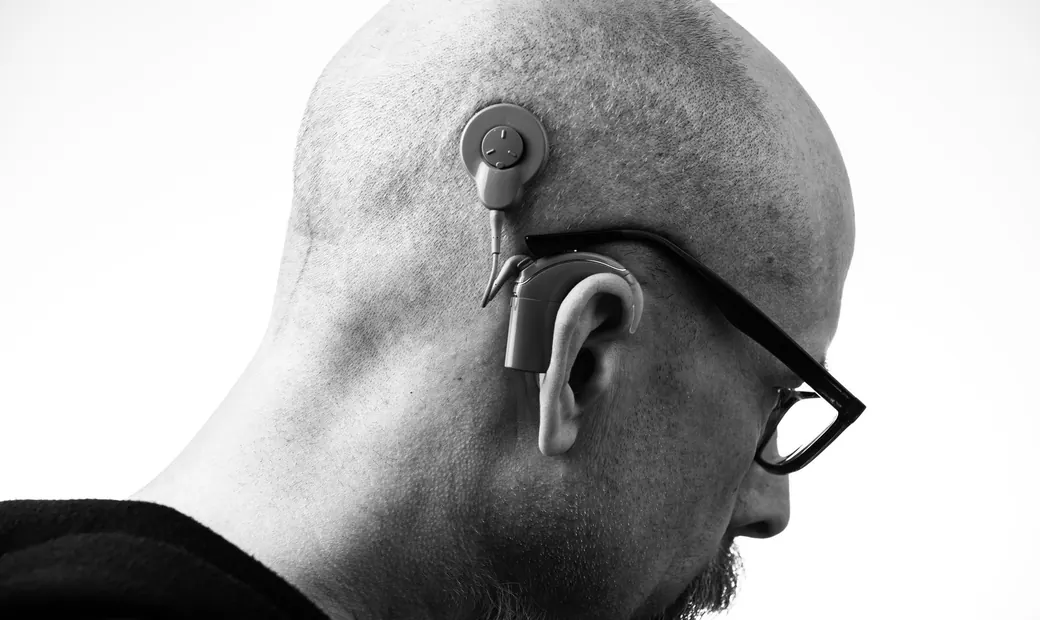
- Hearing aids are far less conspicuous than their reputation, and over-the-counter options now exist for mild to moderate loss.
- Noise-induced hearing loss is permanent and cumulative, and sudden hearing loss in one ear is a medical emergency.
Hearing loss is treated as a nuisance rather than a health condition, which is why the average person waits years before doing anything about it. That delay looks different once you know what the dementia research found. This is not a scare story and the evidence has real limits, but the link is strong enough that it changed expert guidance. Here is what is actually known.
What the research found
The 2024 Lancet Commission on dementia prevention identified hearing loss as the largest single modifiable risk factor for dementia from midlife, attributing around 7 percent of dementia cases to it across a list of 14 modifiable factors. That is a striking position for something most people regard as an inconvenience of getting older.
Two things about that figure matter. First, it is a population attributable fraction, meaning it estimates how many cases might be avoided if the risk factor were eliminated across the whole population. It does not mean any individual with hearing loss has a 7 percent chance of dementia. Second, it comes largely from observational research, which shows association rather than proof of cause. Hearing loss and dementia may share underlying causes, and early dementia may itself affect how the brain processes sound. Researchers take all three explanations seriously.
Why hearing loss might affect the brain
There are three plausible mechanisms, and they are not mutually exclusive. The first is cognitive load: when sound arrives degraded, the brain spends more effort decoding speech, and that effort is drawn from resources otherwise used for memory and comprehension. People with hearing loss often describe exhaustion after a social evening, which is this mechanism made visible.
The second is social withdrawal. Struggling to follow conversation in restaurants and groups leads people to opt out, and social isolation is itself an established risk factor for cognitive decline. It is a slow process, and people rarely notice they have stopped accepting invitations. The third is structural: reduced auditory input is associated with changes in brain regions that process sound, and there is longstanding evidence that under-stimulated brain areas alter over time. Which of these dominates is unresolved, and it may not matter much for the practical conclusion.
What happened when they tested hearing aids
This is where honesty is required, because the trial evidence is more nuanced than headlines suggest. ACHIEVE was the first large randomised controlled trial of hearing aids and cognition, following 739 adults aged 70 to 84 with hearing loss over three years. Its main result was negative: across the whole group, hearing aids did not slow cognitive decline compared with the control condition.
The interesting part is the subgroup. Among participants recruited from an existing cardiovascular study, who had more dementia risk factors overall, hearing aid use was associated with roughly a 48 percent reduction in three-year cognitive decline. Subgroup findings always warrant caution, since they can arise by chance, but the pattern is coherent: the intervention appears most useful in those at higher risk to begin with. The Lancet Commission's own summary was measured, noting the evidence that treating hearing loss lowers dementia risk is stronger than at their previous report, with hearing aids appearing particularly effective in people who have additional risk factors.
The reasons people wait, and why they are worth overcoming
People typically live with hearing loss for years before acting, and the reasons are consistent: it develops slowly enough to be normalised, it is associated with age in a way that feels like a defeat, hearing aids are perceived as conspicuous, and cost is a genuine barrier in many systems.
Several of those have shifted. Devices are far smaller and less visible than the stereotype, many are effectively indistinguishable from wireless earbuds, and over-the-counter hearing aids for mild to moderate loss are now available in some markets at a fraction of the traditional price. What has not changed is the adjustment period: the brain needs weeks to readapt to sounds it has not processed properly in years, and people who abandon a device in the first fortnight usually do so before that adjustment happens. Anyone fitting a hearing aid should be told that in advance.
Protecting the hearing you have
Prevention runs alongside treatment, and noise exposure is the main modifiable cause. Noise-induced hearing loss is permanent, and it accumulates quietly across concerts, power tools, machinery and years of headphone use at high volume. A practical rule for headphones is 60 and 60: no more than 60 percent volume for no more than 60 minutes at a stretch, with breaks. If someone at arm's length has to raise their voice for you to hear them, the environment is loud enough to be doing damage.
- Use ear protection for power tools, concerts, motorbikes and any sustained loud environment.
- Prefer noise-cancelling headphones, which reduce the urge to raise the volume over background noise.
- Treat sudden hearing loss in one ear as an emergency, since it can sometimes be reversed if treated quickly.
- Have hearing tested if you have diabetes, cardiovascular disease, or take medications known to affect hearing.
- Do not use cotton buds in the ear canal, which push wax deeper and cause avoidable problems.
When to get tested
Get a hearing test if you struggle to follow conversation in restaurants or groups, if you frequently ask people to repeat themselves, if others say the television is too loud, if you have ringing in the ears, or if you find yourself declining social occasions because they are hard work. That last one is easy to rationalise as changing preference and is often the earliest real sign.
Seek help urgently for sudden hearing loss in one ear, hearing loss with dizziness or facial weakness, or ear pain with discharge. This is general information rather than medical advice. The reasonable conclusion from the current evidence is not that hearing aids prevent dementia, because that has not been shown. It is that hearing loss is a treatable condition with real effects on daily life and social connection, the treatment is much better than its reputation, and there is decent reason to think acting early is worth more than waiting.
Frequently asked questions
Does hearing loss cause dementia?
The link is strong but not proven causal. Hearing loss is the largest modifiable risk factor identified by the Lancet Commission, though the evidence is largely observational and shared underlying causes cannot be excluded.
Do hearing aids prevent dementia?
Not proven. The ACHIEVE trial found no overall effect on cognitive decline, but a substantial benefit among participants who had more dementia risk factors to begin with.
When should I get my hearing tested?
If you struggle in restaurants or groups, often ask people to repeat themselves, turn the television up, have ringing in the ears, or find yourself avoiding social events because listening is tiring.
How loud is too loud for headphones?
A practical guide is 60 percent volume for no more than 60 minutes at a time. If someone an arm's length away has to raise their voice, the surrounding noise is loud enough to damage hearing.
Is sudden hearing loss an emergency?
Yes. Sudden hearing loss in one ear should be assessed urgently, since prompt treatment can sometimes restore hearing that would otherwise be permanent.
Read next
- Cognitive Decline: What Research Says About Lowering Your Risk
The full list of modifiable risk factors.
- Why Social Connection Is a Health Behaviour, Not a Luxury
The isolation pathway, examined on its own.
- Health Checks by Decade: What Actually Matters in Your 30s, 40s, 50s and 60s
Where hearing fits among the checks worth having.
This article is for general informational purposes only and is not medical advice. Always consult a qualified healthcare professional about your individual situation, and never start or stop a medication without your doctor. See our Medical Disclaimer.