
Turmeric and Curcumin for Joint Pain: What the Evidence Supports
Key takeaways
- Curcumin is turmeric's active compound and makes up only a few percent of the spice, so food alone delivers little.
- Multiple trials show curcumin extracts reduce pain and improve function in knee osteoarthritis versus placebo.
- One trial found a bioavailable extract worked on par with a common over-the-counter painkiller over 12 weeks.
- Plain curcumin is poorly absorbed, so piperine (black pepper) or an enhanced formulation matters.
- It is generally well tolerated but has a mild blood-thinning effect, so check with your doctor if you take medication.
Turmeric is the rare supplement where the hype and the evidence actually overlap. The golden spice, and specifically its active compound curcumin, has become a staple for achy knees and stiff joints, and unlike many trendy remedies, it has a real body of research behind it for that use. It is not a miracle, and there is an absorption catch worth understanding, but the science here is more encouraging than most. Here is the grounded version.
Turmeric, curcumin and the difference that matters
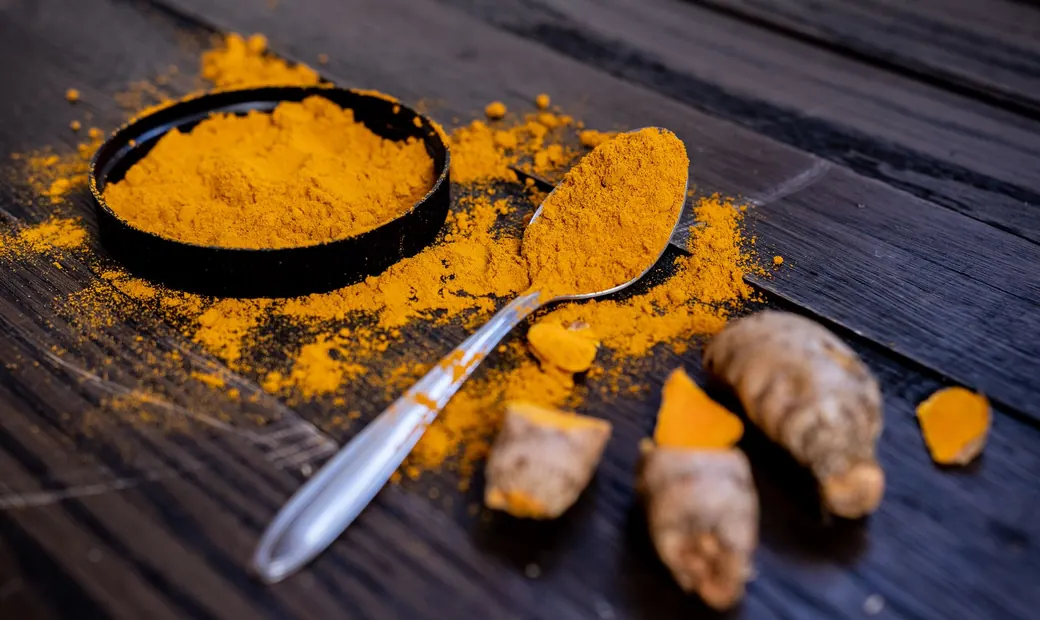
Turmeric is the spice. Curcumin is the active compound inside it that most of the research focuses on, and it makes up only a few percent of turmeric by weight. That distinction matters, because sprinkling turmeric on your food delivers only a small amount of curcumin. The studies on joint pain almost always use concentrated curcumin extracts, not the culinary spice, which is why cooking with turmeric and taking a standardised supplement are not the same thing.
What the research shows for joints
This is turmeric's strongest area, and the evidence is genuinely decent. Multiple randomised controlled trials and systematic reviews have found that curcumin extracts reduce pain and improve physical function in people with knee osteoarthritis compared with a placebo.
In one notable trial, a bioavailable turmeric extract performed on par with a common over-the-counter painkiller for knee osteoarthritis over 12 weeks. That does not make it a cure for arthritis, and it does not reverse joint damage. But as a tool for easing osteoarthritis pain, curcumin has more support than most supplements on the shelf.
The absorption problem, and piperine
There is a catch. Plain curcumin is poorly absorbed: your body struggles to get much of it into the bloodstream, and it clears quickly. This is why the form you choose matters more than with most supplements.
- Black pepper (piperine): a small amount dramatically increases curcumin absorption, which is why many formulas include it.
- Specialised formulations: some products use particular delivery systems designed to raise absorption further.
A plain turmeric capsule without any absorption help may deliver very little of what the studies actually tested.
How to use it sensibly
A few practical notes if you want to try it:
- Dose: trials commonly use roughly 500 to 1,500 mg of curcumin a day, often split into two doses.
- Patience: benefits build gradually, usually over about 4 to 8 weeks, not overnight.
- Formulation: look for a standardised extract with piperine or an absorption-enhanced form, rather than raw turmeric powder.
Safety and who should be careful
Curcumin is generally well tolerated, with mild digestive upset the most common complaint. Still, it is not for everyone. It can have a mild blood-thinning effect, so it is worth caution if you take anticoagulant medication or have surgery coming up. High doses may not suit people with gallbladder problems, and rare reports of liver issues mean quality matters.
As always, if you take regular medication or have a health condition, run it past your doctor or pharmacist first. Turmeric can be a reasonable, evidence-backed add-on for osteoarthritis pain, but it works best alongside the things with the strongest track record for joints: staying active, strengthening the muscles around the joint, and managing weight. It is a support, not a replacement for proper care.
Frequently asked questions
Does turmeric really help joint pain?
For knee osteoarthritis, the evidence is genuinely decent. Curcumin extracts have reduced pain and improved function versus placebo in multiple trials. It eases symptoms rather than reversing joint damage.
Can I just use turmeric in cooking?
Not really, for this purpose. Curcumin is only a few percent of turmeric and is poorly absorbed, so culinary amounts fall well short of the concentrated extracts used in studies.
Why is black pepper in turmeric supplements?
Piperine, a compound in black pepper, sharply increases curcumin absorption. Without it, or a specialised formulation, a plain curcumin capsule may deliver very little into your bloodstream.
How long until it works?
Expect a gradual effect over roughly 4 to 8 weeks of consistent use, not an immediate one. If you see nothing after a couple of months, it may not be helping you.
Read next
- Joint Supplements: What the Evidence Actually Supports
A clear look at which joint supplements are worth your money.
- Knee Pain: What Helps, What Hurts, When to See Someone
Practical guidance for the most common joint complaint.
- 5 Joint Pain Myths That Keep People Stiff
The common beliefs about joints that do more harm than good.
This article is for general informational purposes only and is not medical advice. Always consult a qualified healthcare professional about your individual situation, and never start or stop a medication without your doctor. See our Medical Disclaimer.