
Vitamin C Serum: What It Actually Does for Your Skin
Key takeaways
- Topical vitamin C is mainly an antioxidant, helping neutralise daily damage from sun and pollution.
- Evidence supports it for brightening, evening skin tone and supporting collagen, with gradual results.
- It works alongside sunscreen, not as a replacement, and is not an overnight fix.
- Vitamin C is unstable, so packaging, form and freshness strongly affect whether it works.
- Use a few drops in the morning before sunscreen, and start slow if your skin is sensitive.
Vitamin C serum is one of those skincare products that has crossed from dermatology into everyday routines, promising brighter skin, faded dark spots and a shield against daily damage. Unlike a lot of trendy serums, it has real science behind it. It also has a reputation for being finicky, going off, and not always living up to the bottle. Here is what a vitamin C serum genuinely does, and how to get your money's worth.
Why vitamin C is on your skin, not just your plate
Vitamin C is best known as a nutrient you eat, but your skin also uses it directly, and applying it topically puts it right where you want it. Its main job on skin is as an antioxidant. Every day your skin takes hits from the sun and pollution, which generate unstable molecules called free radicals that speed up aging. Vitamin C helps neutralise some of that damage before it adds up. It is also involved in making collagen, the protein that keeps skin firm.
What the evidence supports
The research here is reasonably good for a cosmetic ingredient, even if a lot of the key studies are older. Topical vitamin C has been shown to help with a few specific things:
- Brightening and tone: it can fade dark spots and even out skin tone over time.
- Antioxidant defence: it reduces some of the daily free radical damage from sun and environment.
- Collagen support: it plays a role in collagen production, which supports firmness.
What it is not is an overnight miracle or a replacement for sunscreen. It works with sunscreen, not instead of it. Most people see gradual improvement in tone over several weeks, with fuller effects taking a few months.
Why the formula matters so much
Vitamin C is famously unstable. It reacts with light and air, and a serum that has oxidised, often turning yellow or brown, has lost much of its punch. This is why the product itself matters more than with most ingredients.
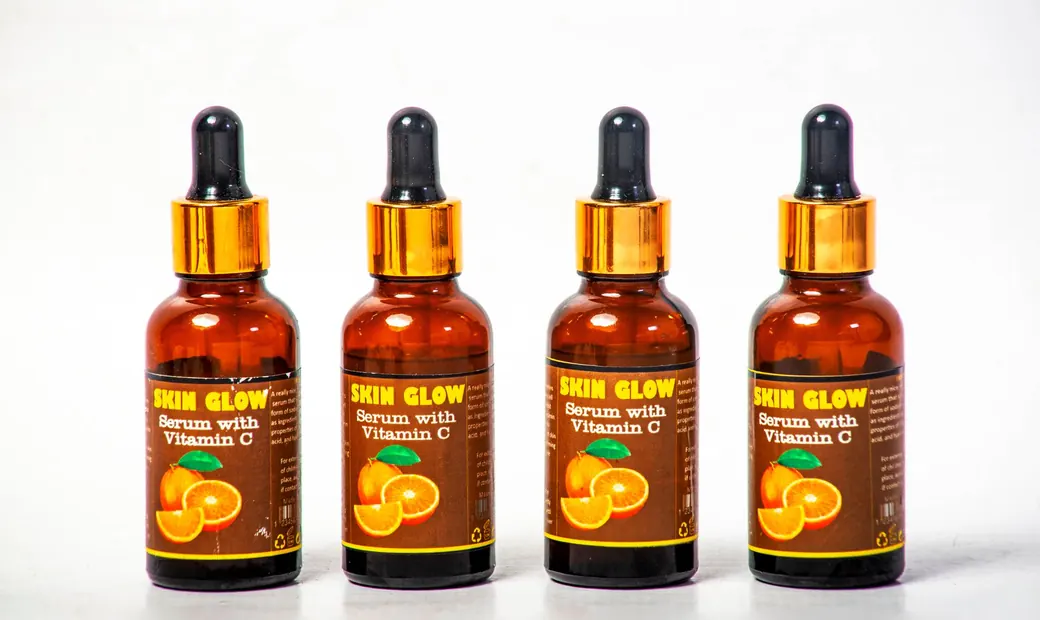
- Packaging: opaque or dark bottles that limit light and air exposure help it last.
- Form: the most studied form is L-ascorbic acid, though gentler derivatives exist for sensitive skin.
- Freshness: if your serum has turned dark, it is past its best and worth replacing.
How to use it for best results
Getting the routine right is simple once you know it:
- Use it in the morning, after cleansing and before moisturiser, so it sits close to the skin.
- A few drops is plenty for the whole face; more is not better.
- Follow with sunscreen. Vitamin C and sunscreen are a genuinely good antioxidant pair for daytime.
- If your skin is sensitive, start every other day and build up, or choose a gentler derivative.
Realistic expectations and cautions
Vitamin C serum is one of the more evidence-backed extras you can add to a routine, but keep the claims in proportion. It is a helpful support for brightness and daily protection, not a treatment for a skin condition, and it will not do the heavy lifting of sunscreen or a retinoid.
Most people tolerate it well, though higher-strength L-ascorbic acid can sting or irritate sensitive skin, in which case a lower concentration or a gentler form is the fix. If you have a specific skin concern, a reactive skin type, or you are unsure how to layer it with other actives, a dermatologist can point you to the right product. Used sensibly, it is a small, reasonable upgrade, not a magic bottle.
Frequently asked questions
Does vitamin C serum really work?
For brightening, evening skin tone and antioxidant protection, the evidence is reasonably supportive, though results are gradual. It is a helpful extra, not a miracle, and not a replacement for sunscreen.
Morning or night?
Most dermatologists suggest morning, so its antioxidant protection works during the day alongside sunscreen. It can be used at night too, but daytime makes the most of its protective role.
Why did my serum turn yellow or brown?
That is oxidation. Vitamin C degrades with light and air, and a darkened serum has lost much of its potency. Store it in opaque packaging and replace it once it changes colour.
Can I use it with retinol?
Often yes, but introduce them carefully, since both can irritate. Many people use vitamin C in the morning and retinol at night. If your skin is sensitive, add one at a time.
Read next
- Retinol vs Retinoids: How to Choose and Use Them Without the Irritation
The other evidence-backed anti-aging active, explained simply.
- Daily Sunscreen: The Single Best Anti-Aging Habit
The habit that protects everything else you do for your skin.
- A Minimal Skincare Routine That Actually Works
How to build a simple routine that covers the essentials.
This article is for general informational purposes only and is not medical advice. Always consult a qualified healthcare professional about your individual situation, and never start or stop a medication without your doctor. See our Medical Disclaimer.